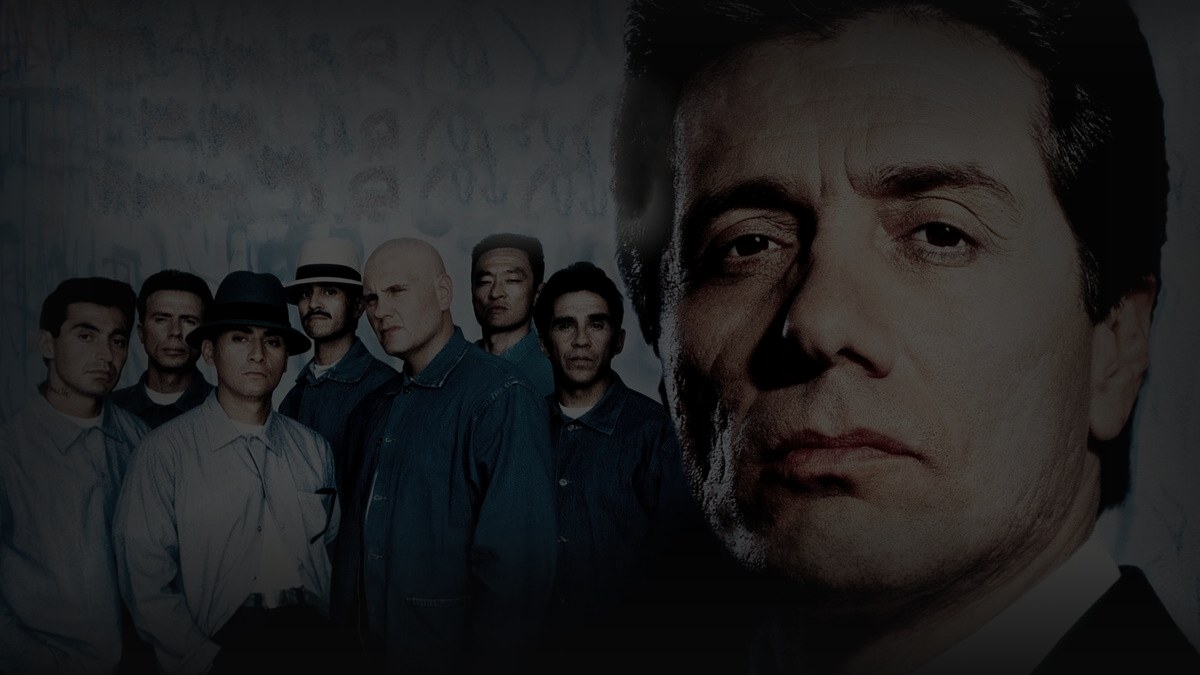
what the film does
the film opens in los angeles in 1943. during the zoot suit riots, a group of servicemen attack pedro santana and rape his wife esperanza in a scene that the rest of the movie circles back to. sixteen years later, their teenage son montoya forms a street gang called la primera with two friends, j.d. and mundo. the three commit crimes, are arrested, and end up in juvenile hall. when a fellow inmate rapes montoya, montoya kills him. he is moved to folsom state prison as an adult and rises over the next decade to lead la eme, the mexican mafia, which controls the drug trade inside the prison and extends it to the streets.
montoya is paroled in 1977. he tries to live a life outside, with a woman named julie, but la eme has grown past anything he can hold. when a drug lord refuses to surrender distribution, la eme retaliates by raping and murdering the lord’s son in prison. the lord responds by flooding montoya’s neighborhood with pure heroin. one of the overdose victims is julie’s brother. at his mother’s grave, montoya learns that his father always suspected he was the child of esperanza’s rapist. montoya tells j.d. that he wants out. the film ends the way the mexican mafia ends internal dissent, with montoya stabbed and thrown from a balcony by his own men, including mundo, so that no prison gang can read the departure as weakness.
where it sits in the canon
the prison-and-gang thread of the canon runs american me alongside the work of olmos and his collaborators, and the film functions as both a personal statement and an institutional one. olmos’s performance is austere, the camera work by reynaldo villalobos is flat enough to read as documentary, and the screenplay by floyd mutrux and desmond nakano refuses the redemption arc the genre usually demands. there is no path out for santana, and the film does not pretend one exists. selected for the national film registry in 2024, a quarter century after release, which is roughly the cadence the canon uses for films that were not seen in their own time and then become durable.
criterion 4 slot: no other film in the canon depicts the founding of the mexican mafia from the inside, across three generations, with the zoot suit riots as the originating trauma. blood in blood out covers the same prison world from the irish-mob angle; a better life covers the undocumented-immigrant angle; american me is the only one that puts la eme on screen as itself.
image: letterboxd, baked 32.9 (pre-darken 0.65, bake 0.45)