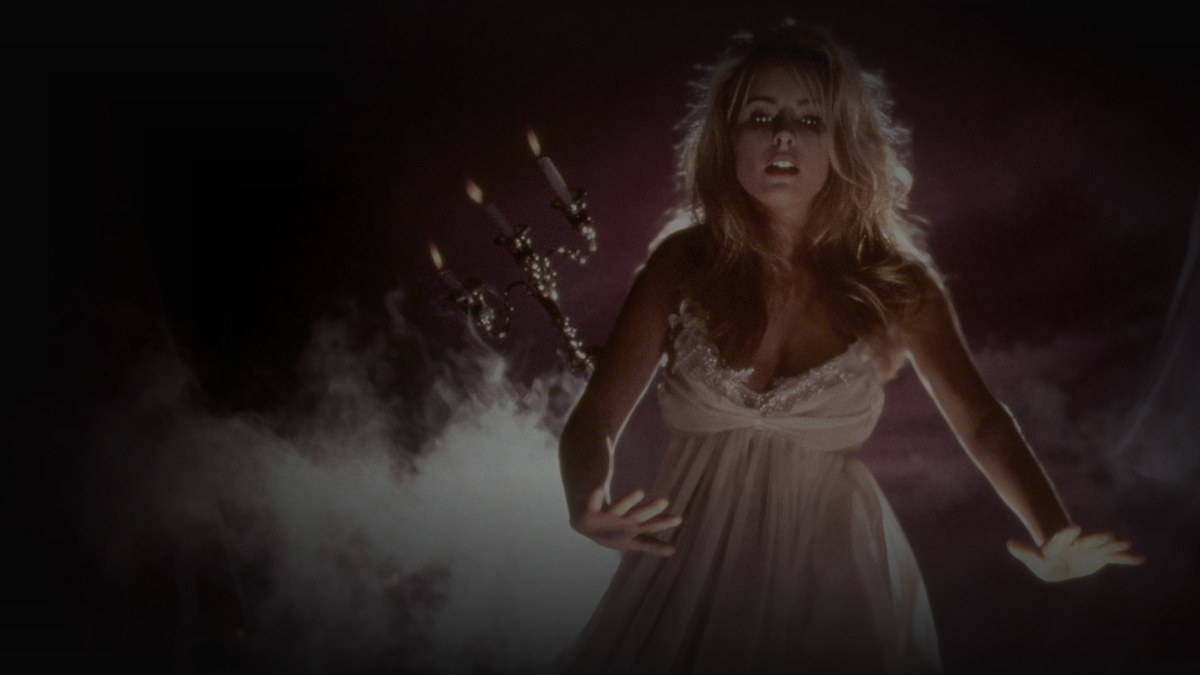
Witchboard 2 (1993)
Ami Dolenz’s Paige moves into a Los Angeles loft and finds a Ouija board, then starts receiving messages from a former tenant named Susan. It is a sequel that keeps the original film’s occult machinery while making the apartment itself feel like a trap.
Why it’s in the canon
90s occult horror with a great apartment-haunting setup. The criteria blend is 1+3, I loved it, and I want to remember it. The film has the particular pleasure of a cheap supernatural mystery that keeps adding new information to the room around its heroine, until the Ouija board feels less like a prop than a bad telephone line.
What the film does
Witchboard 2 turns a bright Los Angeles loft into a haunted puzzle box. Paige follows the board’s messages through tenant gossip, disturbing dreams, violent poltergeist attacks, and paintings that seem to come from somewhere outside her own mind. The story keeps shifting its suspicion between the ghost, the people around Paige, and Paige herself. It is a scrappy sequel, but the apartment setting gives its possession story a strong sense of place.
What stays with me
The film understands the appeal of an ordinary room becoming impossible to trust. The board sits in the middle of Paige’s new life, offering just enough proof to keep her asking the next question, and just enough danger to make every answer feel like a mistake.
On hand
Yes, DVD. The second Witchboard is exactly the kind of 90s supernatural sequel that belongs on the shelf beside the first one, even when it is working with a smaller and stranger set of tools.
image: still from Witchboard 2 (1993), dir. Kevin S. Tenney, via Letterboxd, baked at 0.45, final mean brightness 27.9